


Most people associate varicose veins primarily with large, painful blue and purple nodules that disfigure the legs of both sexes.But what looks so ugly is already developed, even advanced disease.The first stages of the disease are practically invisible to others and are often not taken seriously by the patients themselves.
But not reacting to emerging pain, swelling, and even more so spider veins is extremely risky, since the disease is severe, does not disappear by itself and threatens to develop dangerous complications.If the disease is neglected, not only ugly nodules will appear on the legs.Violations in the venous outflow will cause irreversible consequences in the tissues, which will lead to the formation of trophic ulcers.It is a serious and painful disease that is very difficult to treat.
If the disease progresses, the blood supply to the lower extremities will constantly deteriorate.This will lead to the fact that the tissues will no longer receive the necessary amount of oxygen and nutrients, as the vessels will be clogged, twisted and stop performing their functions.The result will be serious problems, including tissue death and the development of gangrene.And this is amputation and disability.So varicose veins require careful attention and the fastest possible response.Only if the correct treatment is started on time, it will be possible to avoid not only serious consequences, but also to get rid of the ugly and annoying bulging veins on the legs.
Causes of varicose veins in the legs
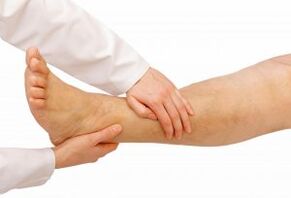
There are many reasons and factors that can provoke the development of varicose veins.
There are many reasons for the appearance of varicose veins on the legs.But basically, the impetus for the development of the disease is various reasons such as work with constant standing, hereditary predisposition or love of uncomfortable high-heeled shoes.
The real reason for the formation of varicose veins is the violation of venous outflow.In the human body, blood circulates, that is, it constantly moves through the circulatory system.Once in the lower extremities, the blood cannot return upward by itself;it needs a "pump".Its role is performed by special venous valves.
If they begin to cope poorly with their duties, then the so-called reflux occurs - the reverse flow of blood due to valve damage.Such disorders are provoked by problems with the physiological balance between muscle cells, elastic fibers of vascular walls and collagen.When the blood returns, it leaks into the tissues, leading to the formation of chronic venous insufficiency.
In this case, swelling occurs, and then, as blood components leak into the tissue, fluid stagnation (stasis) occurs and microcirculation is disrupted.The cells gradually die and a trophic ulcer appears at the site of blood accumulation.These are long-term non-healing, painful tissue defects, open doors to infection and even more dangerous health problems.
First signs, stages and their symptoms
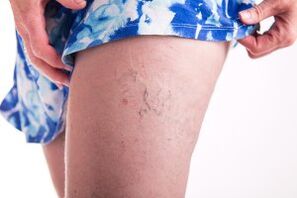
The symptoms of varicose veins are directly related to its stages.
Varicose veins in terms of prevalence can be considered one of the most common diseases.It has been known since ancient times, for which there is not only documentary but also material evidence.A mummy was found in Egypt with traces of varicose veins and clearly repeatedly treated trophic ulcers.
The disease affects both men and women, but it is slightly more common among the fairer sex.The main reason for the difference is that women give birth and wear high heels, as well as spend more time on their feet.
Varicose veins can develop in youth, often provoked by pregnancy and childbirth, when there is a high load on the venous system due to the growth and pressure of the fetus, and then after the stress of childbirth.
Initially, the symptoms of the disease are difficult to distinguish and difficult to distinguish from other problems.
First, a slight pain in the calves is noticed, especially after walking, which is often due to normal fatigue.The patient may complain that he gets tired quickly and cannot walk long distances as before.He is troubled by spasms, a burning sensation, distension, often worse at night;in the evening, swelling, a feeling of heaviness and "lead" legs appear.
Most often, at this stage, patients do not consult a doctor, attributing the discomfort to uncomfortable shoes, heavy load on the feet, heat and fatigue.But the disease can progress over years and even decades, until the situation worsens so much that blue veins protruding under the skin become noticeable or spider veins appear.And even the presence of such symptoms and pain, clearly directed along the veins, does not always force the patient to seek medical help.
There are many methods of classifying the disease, but the division into stages is most often used:
- First- damage to a small number of vessels, mainly in the lower part of the legs, with complaints of pain, fatigue, mild manifestation of the venous pattern.Treatment started at this stage is particularly effective.
- Second- addition of symptoms of impaired venous outflow: swelling, fluid stagnation, appearance of mild pain in the calves and legs.A common sign is severe fatigue at the end of the working day.
- third– development of venous valvular insufficiency.The formation of curved, twisted veins, severe swelling, changes in skin color to cyanosis, an emerging tendency to the formation of trophic ulcers.A characteristic symptom is the appearance of pain even with minor physical exertion on the legs.
- Fourth- noticeable bulging, curved blue veins under the skin, formation of nodules that protrude the skin of the limbs, presence of non-healing trophic ulcers.At this stage, only emergency surgery can help.
It is necessary to treat varicose veins as early as possible, and not to resort to amateur measures, but do not forget to seek help from a specialist - a phlebologist.He will assess the condition of the blood vessels, conduct a diagnosis and prescribe the correct treatment.It is most often combined, including different methods of impact.
Diagnosis of the disease
In the early stages, it may be impossible to detect varicose veins in the legs with visual methods.The best way is considered duplex sonography of the vessels of the lower extremities.It allows you to get a complete picture of the condition of the leg veins, including the deep ones, to assess the level of blood flow, does not cause discomfort or pain to the patient, and also contributes to the correct choice and prescription of the optimal method of treatment.
Drug treatment
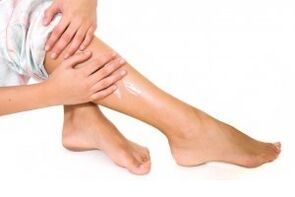
For the treatment of varicose veins in the first stages, special creams, ointments and tablets are used.
The main threat posed by varicose veins is thrombophlebitis, i.e.inflammatory process in the walls of blood vessels.With it, the risk of thrombosis increases sharply, and a blood clot is a direct threat not only to the patient's health, but also to his life.A "breakaway" blood clot can travel through the bloodstream to vital organs and cause potentially fatal conditions - pulmonary embolism, myocardial infarction or stroke.
In the initial stages of the disease, combined therapy is used, mainly based on the use of special drugs - venotonics and compression products.The main drugs are drugs that thin the blood and prevent the formation of blood clots, tone and strengthen blood vessels, improve blood circulation.
Compression therapy involves the use of special elastic bandages and compression knitwear - socks, stockings, socks and pantyhose.
They must be chosen by a doctor depending on the degree of development of the disease.In the initial stages, preventive compression hosiery is most often used.High-quality medical products do not differ in appearance from special knitwear, so they can be worn daily.They are especially recommended for women who are on their feet most of the day - saleswomen, hairdressers, teachers.
Traditional methods of treating the disease
Traditional medicine treats varicose veins in the legs in the following ways:
- Compresses of green tomatoes.This drug, strange at first glance, perfectly helps to relieve inflammation, bulging blood vessels and swelling.Unripe tomatoes, cut into circles, are applied to the affected area overnight and removed in the morning.
- Tincture of horse chestnut.This plant is widely used to treat vein problems, so you can make it at home.Rubbing the legs with the tincture relieves pain and swelling, tones and strengthens the veins.
- Ginkgo biloba– a century-old tree with interesting triangular foliage.Its leaves are used as a very effective means of improving blood circulation and strengthening the walls of blood vessels.
You can fight the manifestations of varicose veins with the help of various herbal preparations, but it is best to consult your doctor first.
Surgical intervention
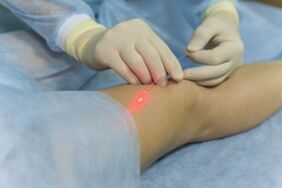
The essence of the operation is ligation and removal of pathologically changed veins.
Surgical procedures for varicose veins are a common phenomenon, since the developed disease cannot be cured by conservative methods alone.
The most commonly used surgical techniques are:
- phlebectomy,or removal of the affected veins.
- Laser coagulation– a modern method of obliteration (clogging) of diseased vessels by means of a directed laser beam.Over time, the vessel ceases to function, becomes sclerosed and dissolves.The technique is considered gentle, as it does not require incisions, hospitalization of the patient and a long recovery period.The procedure gives an excellent cosmetic effect.
- Radiofrequency coagulation- a way to eliminate reflux in the great or small saphenous vein.Its effectiveness is comparable to phlebectomy, but it does not require a rehabilitation period and is more easily tolerated by patients.
- sclerosis.A method in which, under the control of an ultrasound machine, a special drug is injected into the vein, which causes the vein to stick.
Prognosis for treatment and possible complications
Varicose veins of the legs are a serious disease that can easily lead to very dangerous complications.The main danger is the development of thrombosis, which can cause damage to the entire body.The detachment and migration of a blood clot threatens a person with unexpected death, because a blood clot entering vital organs and blocking a vessel can easily cause a stroke, heart attack or embolism.
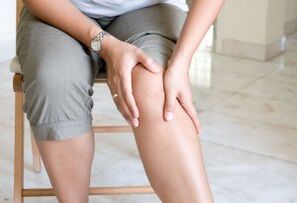
Advanced varicose veins can cause disability.
The second terrible threat that varicose veins carry with them is the deprivation of mobility and disability of the person.If the disease is not treated, it can lead to the development of complete blockage of the veins of the legs, in which gangrene will develop, and doctors will have no other option to save the patient's life, except amputation of a limb or both legs.
Such severe consequences can be prevented only by timely seeking medical help and strict adherence to medical prescriptions.Timely treatment can protect you from terrible complications and preserve the health and beauty of your feet.
Prevention is important to prevent the disease.Doctors constantly repeat these simple rules, but most people stubbornly ignore them until the problem of veins affects them personally.
The preventive measures to prevent varicose veins are as follows:
- Moderate physical activity.Both overloading and passive sitting in motionless positions, which causes stagnation of blood in the lower extremities, are equally harmful to vascular health.
- Refusal of bad habits - smoking and drinking alcohol.They have an extremely negative effect on the condition of the veins.
- Wear comfortable shoes with a medium heel, no more than 5-6 cm high.
- Use of preventive compression hosiery if necessary, during "standing" work or aggravated heredity, during pregnancy and childbirth.
- Fight with extra pounds.Significant body weight is one of the factors contributing to the development of varicose veins.
Following these simple rules will help you keep your veins strong and healthy, and your legs beautiful and slim.